
\ Latest \ Fuel Filtration Guide for Australian Diesel Owners: Understanding Pre-Filters and Post-Filters
Recent Posts
- Fuel Filtration Guide for Australian Diesel Owners: Understanding Pre-Filters and Post-Filters
- 🔧 HOT TIPS #01: How to Service Your Diesel Filters for Maximum 4×4 Performance – NEW
- Tyre Repair Kit
- Transchill Dual Cooler Kit for Mitsubishi Triton and Pajero Sport
- Transchill Installation on Toyota Hilux 2020
OUR PRODUCTS
Fuel Filtration Guide for Australian Diesel Owners: Understanding Pre-Filters and Post-Filters
- Posted September 9, 2026
- in Maintenance & How-To
Fuel filtration is the process of removing contaminants such as dirt, water, rust and sediment from diesel fuel before they reach critical engine components. Effective fuel filtration helps maintain fuel quality and supports the long-term performance and reliability of modern diesel fuel systems.
A secondary fuel filter is an additional filtration stage installed alongside the vehicle’s original equipment (OE) fuel filter. Most commonly, these systems are installed as a pre-filter, helping remove water and larger contaminants before fuel reaches the factory filter. In some applications, additional filtration may also be added downstream of the OE filter.
Modern diesel vehicles deliver impressive power, fuel efficiency and towing capability, but they also rely on highly sophisticated fuel systems. Today’s common rail diesel engines operate at extremely high pressures and use precision-engineered components designed to deliver fuel with incredible accuracy. While this technology has brought significant improvements in performance, emissions and fuel economy, it has also made modern diesel fuel systems more sensitive to contamination than ever before.
Even small amounts of dirt, water or other contaminants can contribute to increased wear within critical fuel system components. Over time, contamination may impact performance, reduce component life and potentially lead to expensive repairs.
For Australian diesel vehicle owners, understanding how fuel filtration works is becoming increasingly important. Whether you’re towing a caravan, travelling remotely, using your vehicle for work or simply looking to maximise long-term reliability, knowing the difference between pre-filters and post-filters can help you make informed decisions about protecting your fuel system.
If you’re new to diesel fuel system protection, you can also explore the full Direction Plus Fuel Filtration range to learn more about the filtration solutions available for modern diesel vehicles.
Why Fuel Quality Matters More Than Ever
Fuel quality has always mattered, but modern diesel engines operate with far less tolerance for contamination than older mechanical diesel systems.
Common rail fuel systems can operate at pressures exceeding 2000 bar, with injectors delivering extremely precise amounts of fuel multiple times during each combustion cycle. These systems rely on highly engineered components manufactured to extremely fine tolerances, which helps improve performance, fuel efficiency and emissions outcomes but also increases sensitivity to contamination. (source: denso.com.au)
Contaminants can enter fuel in several ways, including:
- Dust and dirt particles
- Sediment from fuel storage tanks
- Water contamination
- Corrosion within fuel storage systems
- Microbial growth associated with water in fuel
While fuel generally reaches the vehicle after passing through numerous stages of storage, transportation and handling, contamination can potentially be introduced at various points throughout the supply chain. This includes storage terminals, transport equipment, service station tanks and dispensing systems.
For vehicle owners, the challenge is that fuel quality is largely outside their control. Every time a vehicle is refuelled, there is an element of trust involved in the storage and handling practices that occurred before the fuel reached the pump.
Water contamination can also be associated with fuel storage conditions. Fuel tanks that experience significant temperature variations may be more susceptible to condensation, while long-term fuel storage can increase the opportunity for moisture accumulation.
For diesel owners who spend significant time touring, towing or travelling through varying climates, understanding the role water can play in fuel quality is an important part of preventative maintenance.
How Fuel Filtration Protects Modern Diesel Engines
The purpose of a fuel filter is simple: remove unwanted contaminants before they reach sensitive fuel system components.
Factory fuel filtration systems perform a critical role in protecting injectors, pumps and other precision components. However, as diesel technology has evolved and repair costs have increased, many owners have chosen to add secondary fuel filtration as an additional layer of protection.
Secondary fuel filtration works alongside the factory filtration system rather than replacing it. Depending on the type of system installed, it may target larger contaminants and water before they reach the original equipment (OE) filter or capture finer particles after the OE filter has completed its role.
The concept is similar to using multiple stages of filtration in other applications. Each stage performs a specific task, helping improve overall system protection and reducing the load placed on individual filters.
Understanding Secondary Fuel Filtration
Secondary fuel filtration adds another level of defence against contamination entering the fuel system.
Depending on the vehicle and filtration strategy, a secondary fuel filter may be installed either before the factory fuel filter (pre-filter) or after the factory fuel filter (post-filter).
Rather than replacing the original filtration system, it complements it.
Depending on the filtration system selected, a secondary fuel filter can help:
- Capture particulate contamination
- Separate water from diesel fuel
- Provide an additional stage of fuel filtration
- Reduce contaminant load on the OE filter
- Support the long-term health of the fuel system
For many diesel owners, secondary fuel filtration represents a practical preventative measure that can be incorporated into the vehicle without affecting everyday drivability or normal vehicle operation.
Pre-Filter vs Post-Filter: What's the Difference?
Not all secondary fuel filters perform the same function. While both aim to improve fuel cleanliness, they are designed to address contamination at different points within the fuel system.
Direction Plus offers both pre-filter and post-filter systems, allowing owners to select a solution that aligns with their intended vehicle use and protection goals.
Understanding the differences between the two systems can help determine which approach best suits your vehicle.
Pre-Filter Kits
Pre-filter kits are installed before the vehicle’s factory fuel filter.
Their primary role is to remove larger contaminants and, in many applications, separate water from diesel fuel before it enters the OE filtration system. By addressing contamination earlier in the fuel flow process, pre-filters help reduce the burden placed on the factory filter.
For many Australian diesel owners, water management is one of the biggest reasons for installing a pre-filter. This is particularly relevant for people who frequently travel long distances, refuel in unfamiliar locations or operate in challenging environments.
Benefits of pre-filter kits include:
- Water separation capability
- Removal of dirt, rust and sediment before the OE filter
- Reduced contamination load on the factory filtration system
- Suitable for touring, towing and remote-area travel
- Helps reduce the risk of water reaching sensitive components
Because they address contamination before it reaches the factory filter, pre-filters are often viewed as a practical first line of defence within the overall fuel filtration strategy.
Post-Filter Kits
Post-filter kits are installed after the factory fuel filter and before fuel reaches critical fuel system components.
Rather than focusing on larger contaminants or water separation, post-filters are typically designed to capture extremely fine particulate contamination that may pass through earlier filtration stages.
As fuel system tolerances continue to become tighter, some owners choose post-filtration systems to provide an additional level of protection for injectors and high-pressure fuel pumps.
Benefits of post-filter kits include:
- Enhanced filtration after the OE filter
- Additional protection for sensitive fuel system components
- Capture of finer particles
- Suitable for applications where ultra-fine filtration is desired
Post-filters can be particularly attractive to owners looking to maximise fuel cleanliness before fuel reaches some of the most expensive and precision-engineered components within the vehicle.
Which Option Is Right for Your Vehicle?
For many touring, towing and remote-area applications, a pre-filter with water separation capability is often the preferred starting point. By removing water and larger contaminants before they reach the OE filter, pre-filters provide an additional layer of protection where fuel quality may vary.
In some applications, owners may also consider post-filtration as an additional filtration stage. However, the most appropriate solution will depend on the vehicle, operating environment and owner priorities.
Feature | Pre-Filter | Post-Filter |
Installation Position | Before the OE fuel filter | After the OE fuel filter |
Primary Role | Water separation and contaminant removal before the OE filter | Additional fine particle filtration |
Water Separation | Yes (on most systems) | No |
Typical Use Case | Touring, towing, remote-area travel, fleet vehicles | Additional filtration where ultra-fine filtration is desired |
Key Benefit | Helps prevent water and contaminants from reaching the factory filtration system | Additional particulate filtration downstream of the OE filter |
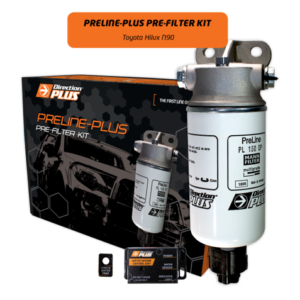
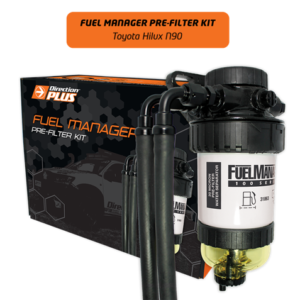
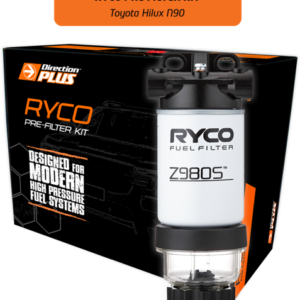
Direction Plus Solutions | Fuel Manager, PreLine-Plus, Ryco | Fuel Manager Post-Filter Kits |
For many Australian diesel owners, water contamination is the primary concern, which is why pre-filters are often considered the first step when adding secondary fuel filtration.
Why Secondary Fuel Filtration Is Popular Among 4WD Owners and Tourers
For many Australians, a diesel 4WD is much more than a daily commuter. It’s a work vehicle during the week, a tow vehicle on weekends and the centrepiece of family adventures during holidays.
Whether travelling across the country with a caravan, exploring remote tracks or venturing into regional Australia, vehicle reliability becomes increasingly important as the distance from support services grows.
Unexpected mechanical issues are inconvenient in urban environments, but they can become significantly more disruptive when travelling hundreds of kilometres from the nearest workshop.
A secondary fuel filter cannot guarantee that fuel-related issues will never occur. However, it can help reduce exposure to contaminants before they enter the fuel system.
This makes additional fuel filtration a popular upgrade for people who regularly:
- Tow caravans and campers
- Travel long distances
- Venture into regional and remote areas
- Operate in dusty environments
- Use their vehicle for work
- Depend on their vehicle for extended touring
The appeal is straightforward. By helping manage water and particulate contamination before it reaches sensitive fuel system components, secondary filtration supports a proactive approach to vehicle protection.
The Cost of Fuel System Repairs
Modern diesel fuel systems contain some of the most sophisticated components found anywhere on the vehicle.
High-pressure fuel pumps and common rail injectors are engineered to operate with exceptional precision under demanding conditions. These components play a crucial role in engine performance, efficiency and emissions control.
Because of their complexity, repair or replacement costs can be significant.
Contamination does not automatically lead to component failure, but it can contribute to increased wear over time. In severe cases, contamination-related fuel system damage may affect multiple components throughout the system.
For many owners, the investment in additional filtration is less about solving a current problem and more about reducing the likelihood of future issues.
Viewed through that lens, secondary fuel filtration is often considered part of a broader preventative maintenance strategy.
Additional Protection for Remote Travel
One of the greatest advantages of additional fuel filtration becomes evident during remote-area travel.
A cross-country journey may involve fuel from multiple service stations, smaller regional locations, stored fuel supplies or jerry cans carried specifically for remote travel. Every additional transfer and storage stage introduces another variable.
This does not mean fuel quality is poor or unreliable. However, it highlights why many experienced travellers look for practical ways to minimise avoidable risks.
Just as touring vehicles are often equipped with upgraded suspension, underbody protection, recovery equipment and tyre monitoring systems, fuel filtration is commonly viewed as another component of a comprehensive vehicle preparation strategy.
The objective is not to anticipate problems, but to improve preparedness and support vehicle reliability throughout the journey.
Direction Plus Fuel Filtration Solutions
Direction Plus offers a range of fuel filtration solutions developed specifically for modern diesel vehicles operating in Australian conditions.
For drivers looking to add a pre-filter, Direction Plus offers vehicle-specific solutions including:
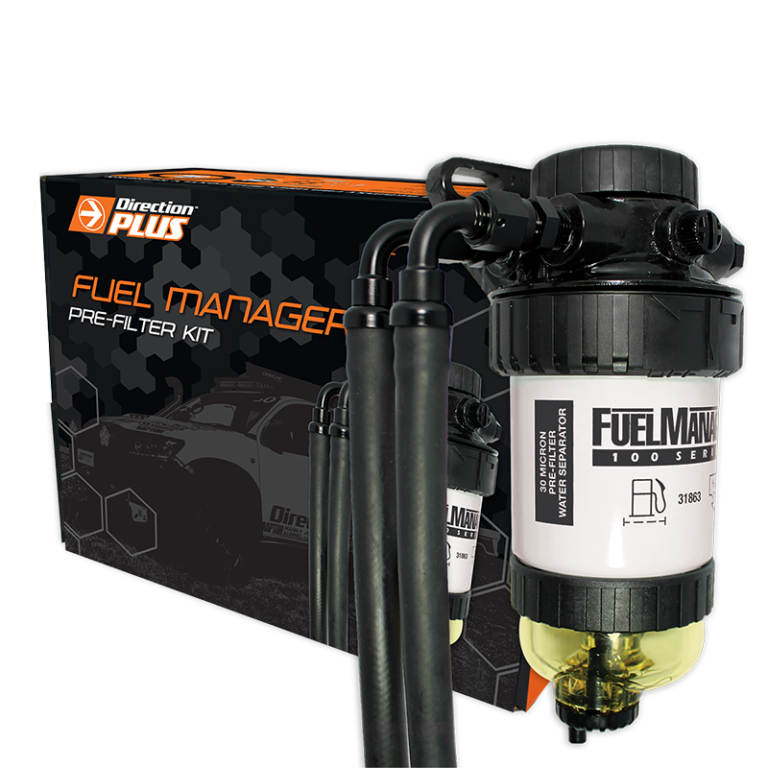
- Fuel Manager Pre-Filter Kits
- PreLine-Plus Pre-Filter Kits
- Ryco Pre-Filter Kits
These systems provide an additional stage of filtration before fuel reaches the vehicle’s OE fuel filter, helping manage particulate contamination and, in many applications, separate water from the fuel supply.
For owners seeking filtration after the factory filter, Fuel Manager Post-Filter Kits provide ultra-fine filtration before fuel reaches critical components such as high-pressure fuel pumps and injectors.
These systems are designed to complement the vehicle’s existing filtration strategy while helping support fuel system cleanliness and long-term reliability.
Direction Plus fuel filtration products are engineered to integrate with factory fuel systems, allowing owners to add another layer of protection without compromising everyday vehicle functionality.
Investing in Long-Term Reliability
Modern diesel vehicles represent a significant investment, and their fuel systems are among their most technologically advanced features.
While factory filtration systems already provide important protection, secondary fuel filtration offers an additional opportunity to help manage contaminants before they reach sensitive components. For many diesel owners, particularly those who tow, tour or travel remotely, a high-quality pre-filter provides an effective first line of defence against water and particulate contamination. Additional filtration options may also be considered depending on the application, but the overall goal remains the same: supporting fuel system health and long-term reliability.
For drivers who tow, tour, travel remotely or simply want added peace of mind, secondary fuel filtration has become one of the most popular preventative upgrades available for modern diesel vehicles.
Explore the Direction Plus Fuel Filtration Range
If you’re looking to add another layer of protection to your diesel vehicle, explore the Direction Plus range of Fuel Manager Pre-Filter Kits, PreLine-Plus Pre-Filter Kits, Ryco Pre-Filter Kits and Fuel Manager Post-Filter Kits.
Designed for Australian conditions and modern diesel engines, Direction Plus fuel filtration solutions help support reliable performance, cleaner fuel delivery and greater confidence wherever your next adventure takes you.